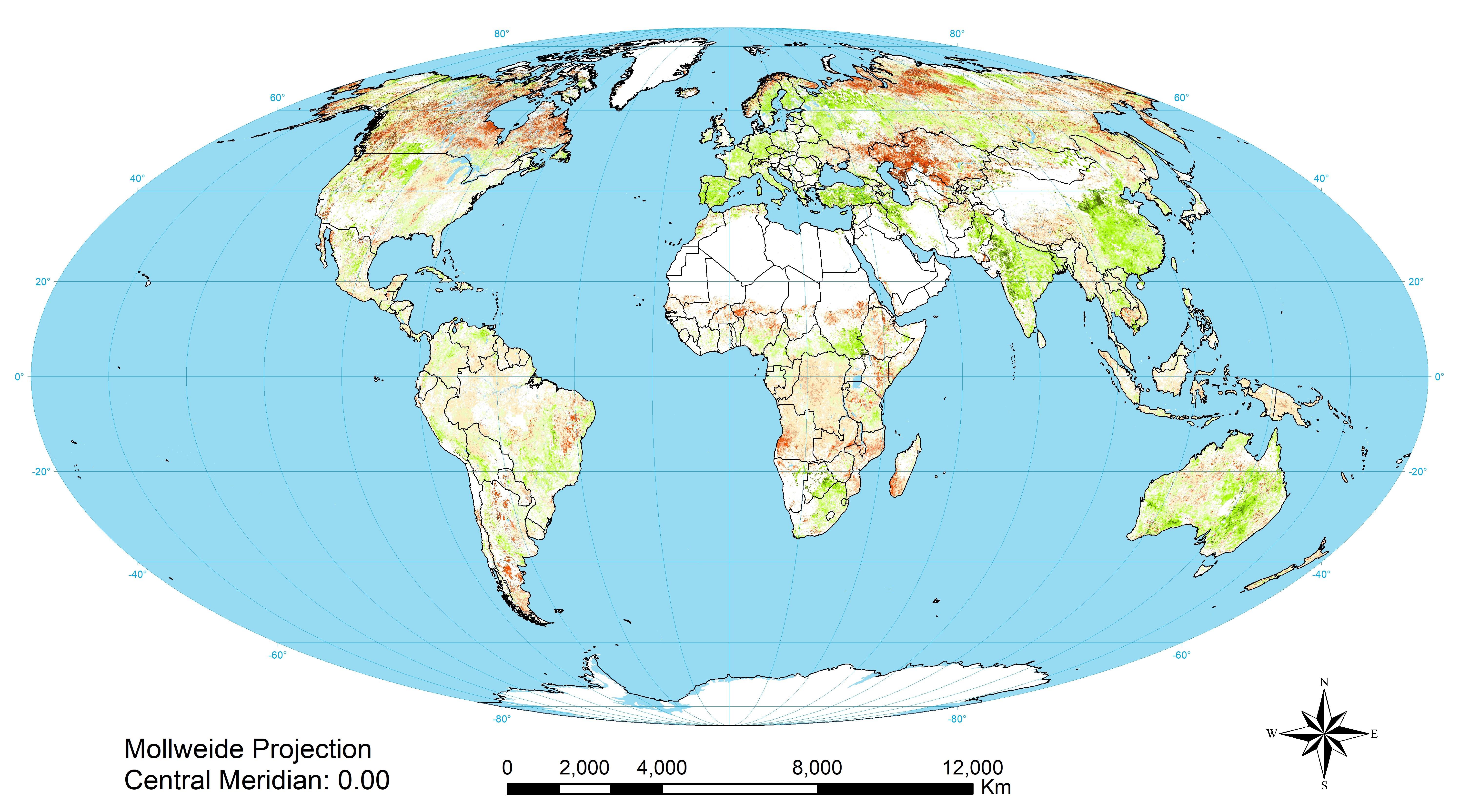


Ever-increasing demands on the land from economic development, burgeoning cities, and growing rural populations are driving unprecedented land-use change. In turn, land-use change is driving land degradation: soil erosion, nutrient depletion, salinity, water scarcity, pollution, disruption of biological cycles, and loss of biodiversity. This is a global issue (UNCED 1992, UNEP 2006), yet there is no authoritative measure of land degradation or its counterpoint – land improvement. The only harmonized assessment, the Global Assessment of Human-induced Soil Degradation is a map of perceptions on the type and degree of degradation. Dating from 1991, it is now out-of-date. There is a pressing need for an up-to-date, quantitative and reproducible assessment to support policy development for food and water security, environmental integrity, and national strategies for economic development and resource conservation. In response, within the GEF-UNEP-FAO program Land Degradation in Drylands, the Global Assessment of Land Degradation and Improvement (GLADA) will identify:
The status and trends of land degradation, and
Hotspots suffering extreme constraints or at severe risk and, also, areas where degradation has been arrested or reversed.
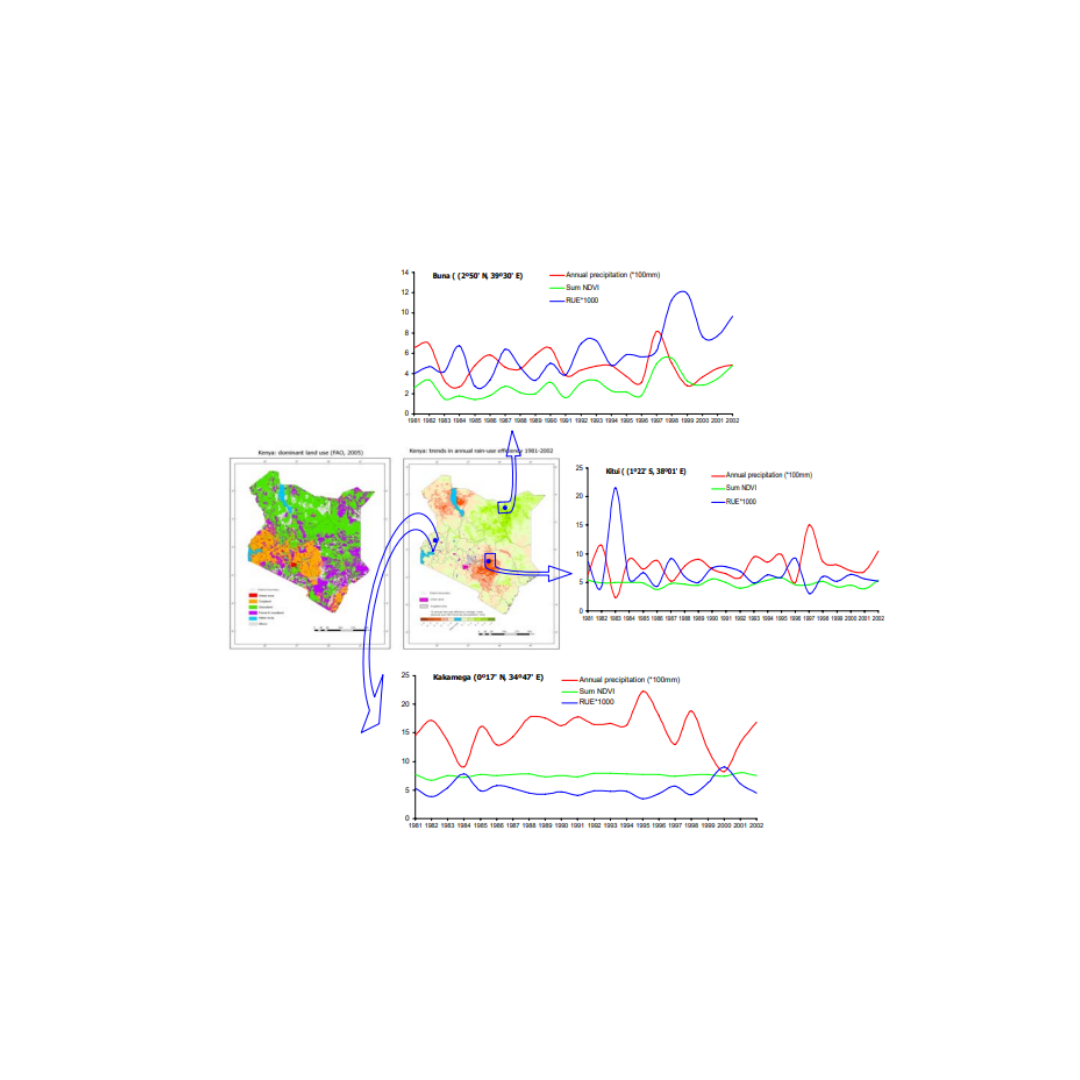
Biomass is an integrated measure of biological productivity. Its deviance from the local norm may be taken as a measure of land degradation or improvement. Changes in biomass may be measured by remote sensing of the normalized difference vegetation index (NDVI - the difference between reflected near-infrared and visible wavebands divided by the sum of these two wavebands). NDVI has a strong, linear relationship with the fraction of photosynthetically active radiation absorbed by the plant; it is strongly correlated with vegetation cover and above-ground net primary productivity. Norms may be established by stratifying the land area according to climate, soils, and terrain, and land use/vegetation; deviance may then be calculated regionally and combined globally to allow universal comparisons.