
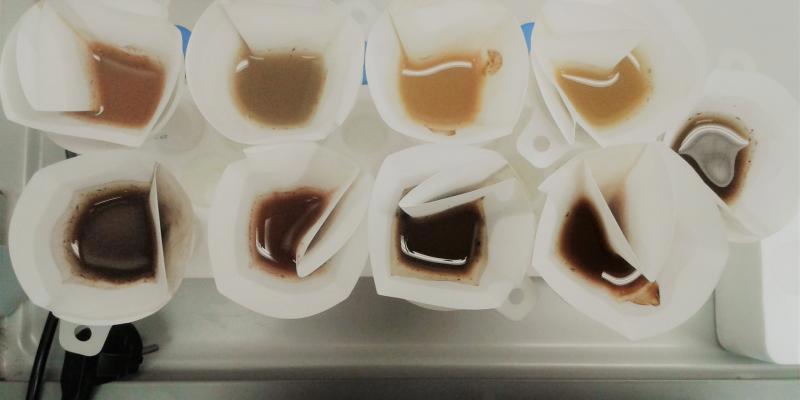


Multi-element soil extractions, like Mehlich 3, gained popularity in recent years. Mehlich 3 (M3) is a cost-effective method as it extracts macronutrients, including phosphorus and potassium, as well as micronutrients from soil samples. Availability of M3 data presents challenges for the use of soil and crop models that are calibrated based on different soil tests. A new research paper sheds light on relations between M3 and traditionally used single element extraction methods for phosphorus and potassium for tropical soils.
The study, “Transfer functions for phosphorus and potassium soil tests and implications for the QUEFTS model” published in Geoderma, looked at relations between Olsen for phosphorus (P-Olsen), ammonium acetate for potassium (K-AA) and those respective nutrients extracted by M3. P-Olsen and K-AA were selected as they are required as input for the well-established and popular Quantitative Evaluation of Fertility of Tropical Soils (QUEFTS) model.
QUEFTS is a decision support tool, developed for tropical regions, that can be used for the evaluation of soil fertility, potential crop yield and fertilizer recommendations.