
/media/ukufctuo/img_9670.jpg

From soil stories to olive orchards: Highlights from the CURIOSOIL annual meeting in Slovenia

Project update

Europe

Soil collections & education

Laura Laroche

23 March 2026

From 3–5 March 2026, CURIOSOIL project partners gathered in Ljubljana, Slovenia, for their annual meeting, organised by the Faculty of Environmental Protection (FVO). The event focused on innovative approaches to soil education and communication. In this blog, ISRIC and CURIOSOIL team member Laura Laroche shares highlights and reflections from the event.

This year's annual meeting took place in Ljubljana, the charming capital of Slovenia, where riverside cafés and surrounding hills set the stage for three days of discussions on soils and soil literacy across Europe. Alongside presentations and workshops, informal exchanges sparked new ideas and connections.

/media/jwqb43h2/app.jpg
Screenshots of the World Soil Museum web-app and the AR functionality (right)

During the meeting, we also shared a glimpse of another exciting activity emerging from the CURIOSOIL Arthaton: a travelling soil exhibition. The exhibition will open at the ISRIC World Soil Museum in Wageningen this September, before travelling to Portugal in 2027 and potentially continuing to other locations across Europe. Bringing together soil art, stories, monoliths, multisensory workshops and digital tools such as the museum app, the exhibition aims to create a rich, immersive experience. Rather than simply observing soils, visitors are invited to experience them through science, art, and storytelling.

Earth as superfood

On the second day, we discovered that artist Masharu, founder of the Museum of Edible Earth, was exhibiting in Ljubljana at the same time as our visit. Having previously collaborated with the World Soil Museum at ISRIC, exploring the cultural relationships between humans and soil, it felt like a perfect opportunity. After a traditional Slovenian dinner in the city, the group visited the exhibition.

Masharu's exhibition, Earth as Superfood, brings together edible earth samples from around the world, inviting visitors to experience soil through taste and storytelling. For a group of soil scientists and communicators, a “soil tasting” exhibition was both slightly unusual and strangely fitting. It sparked lively discussions and reminded us that soil literacy can grow not only through science and education, but also through art, curiosity and sensory experience.

/media/dmhd0ody/img_9680-2.jpg
A displayed of edible earth samples

Škocjan caves

After two days of discussions, the final day offered a change of perspective: a field excursion into the Slovenian landscape.

Just after sunrise, our bus drove out of Ljubljana toward the Karst region, where geology has shaped the landscape over millions of years. As the city faded, urban streets gave way to forests and rolling hills. Slovenia may be small, but its geography is remarkably diverse, and with it, its soils.

Our destination was the Škocjan Caves, a UNESCO World Heritage Site formed in limestone bedrock. Here, slightly acidic rainwater dissolves the rock, creating underground rivers and vast cavern systems. Over thousands of years, the Reka River carved an enormous underground canyon.

Cool air greeted us as we stepped into the cave. A narrow tunnel soon opened into vast chambers where subtle lighting revealed towering rock formations. Far below, the Reka River rumbled through the darkness, continuing its underground journey toward the Adriatic Sea.

After this beautiful visit, we continued toward the Slovenian coast near Piran. As we descended from the karst plateau, the scenery gradually shifted again, with pine forests giving way to terraces of olive trees and colourful coastal villages, signalling our approach to the Adriatic Sea.

/media/0qhhfmsi/img_9884.jpg
Škocjan Caves

Gramona organic farm

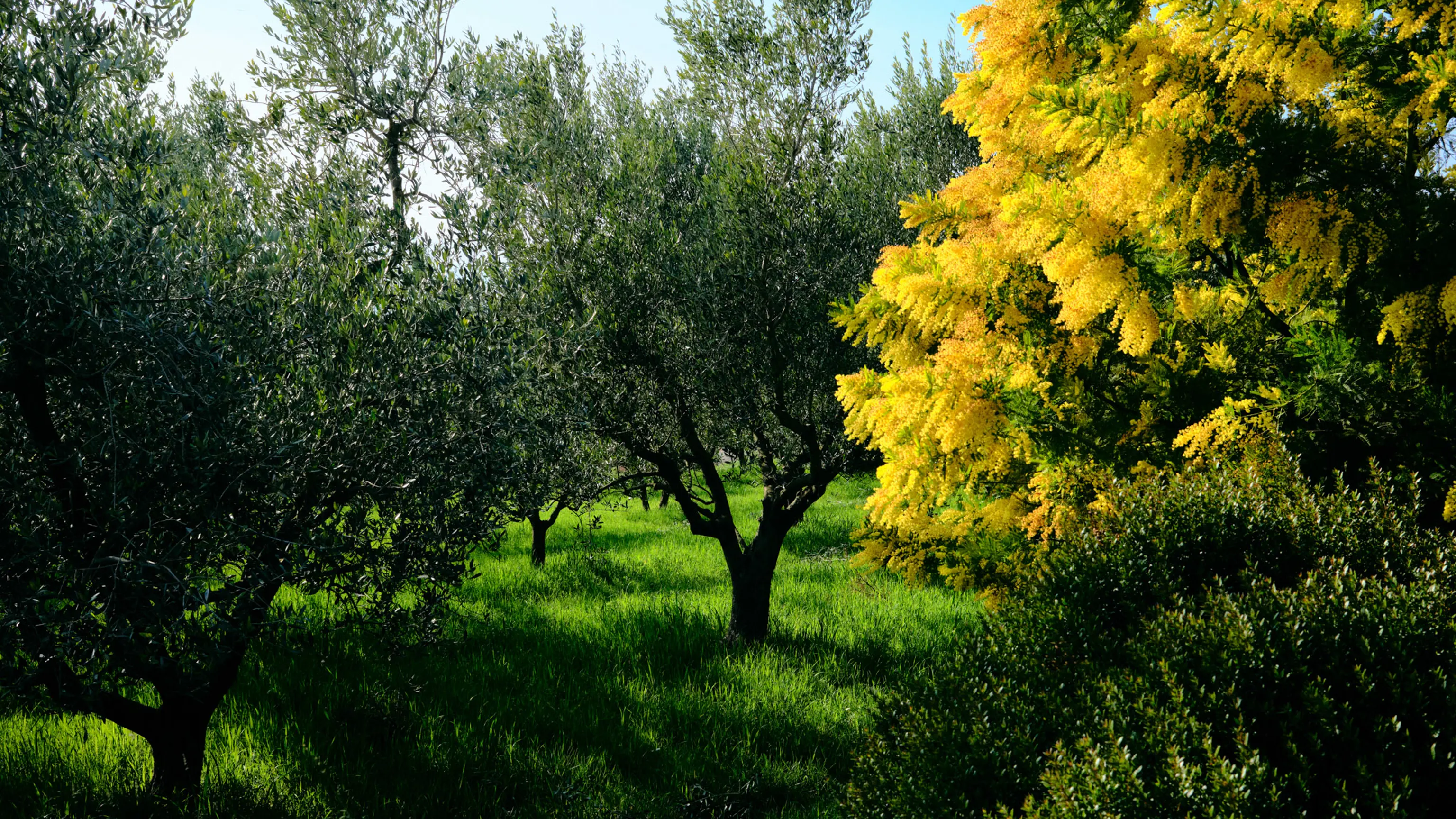
In the afternoon, we visited the Gramona Organic Farm, where olive tree terraces stretched across the hillside under the warm Mediterranean sun. Here we learned about traditional olive cultivation on a young soil. These soils drain well and warm quickly, conditions that olive trees have adapted to over centuries.

As we walked through the orchard, it became clear how the farm integrates soil-friendly management practices. Between the olive trees, the ground was covered with a diverse mix of grasses and flowering plants, protecting the soil from erosion while supporting biodiversity. A swale built along the slope slows down rainwater and allows it to infiltrate rather than run off. According to the owners, trees growing just below the swale, once among the weakest on the farm, are now healthier and more productive.

/media/venhbidn/img_9896-2.jpg
Olive orchard from the Gramona farm

The farm also integrates grazing animals into the system. A small breed of sheep moved quietly between the olive trees, managing vegetation while naturally fertilising the soil. This form of grazing adds organic matter and nutrients while reducing the need for mechanical mowing, which can compact the soil.

/media/3gidpl55/img_9889-2.jpg
Olive orchards with the ground cover

As we looked more closely at the soil, we noticed small piles of freshly turned earth scattered across the surface clear signs of earthworm activity. Ingrid Lubbers (Wageningen University & Research) took the opportunity to give a short field lesson on how to distinguish young from adult worms by the presence of the clitellum.  

/media/0v4p0c4h/img_9873-2.jpg
Young earthworm without a clitellum

That glimpse of life below the surface sparked our curiosity, and before long a spade appeared and a small soil pit was dug. With Stephan Mantel (ISRIC) and Borut Vrščaj (Slovenian institute) in the group, the moment quickly turned into a lively discussion on soil colour, structure and classification ending, to everyone’s amusement, in agreement. After all, getting two pedologists to agree is not an easy task.

/media/wpyhngbg/img_9868-2.jpg
The soil pit that was digged at the Gramona Farm

The warm afternoon sun settled over the olive terraces as we sat together at long tables in the garden. We ended the day and our annual meeting sharing stories, tasting olive oil, and discussing future project plans while overlooking the sea and its salt pans.

In the coming year, work will continue refining the museum app and preparing the travelling soil exhibition. Yet, this trip also reminded us that soils are not just a subject for laboratories and databases. They are part of landscapes, local culture, food systems, and everyday life. Sometimes, the best soil stories are discovered not in a meeting room, but out in the field.

Suggested content

Share