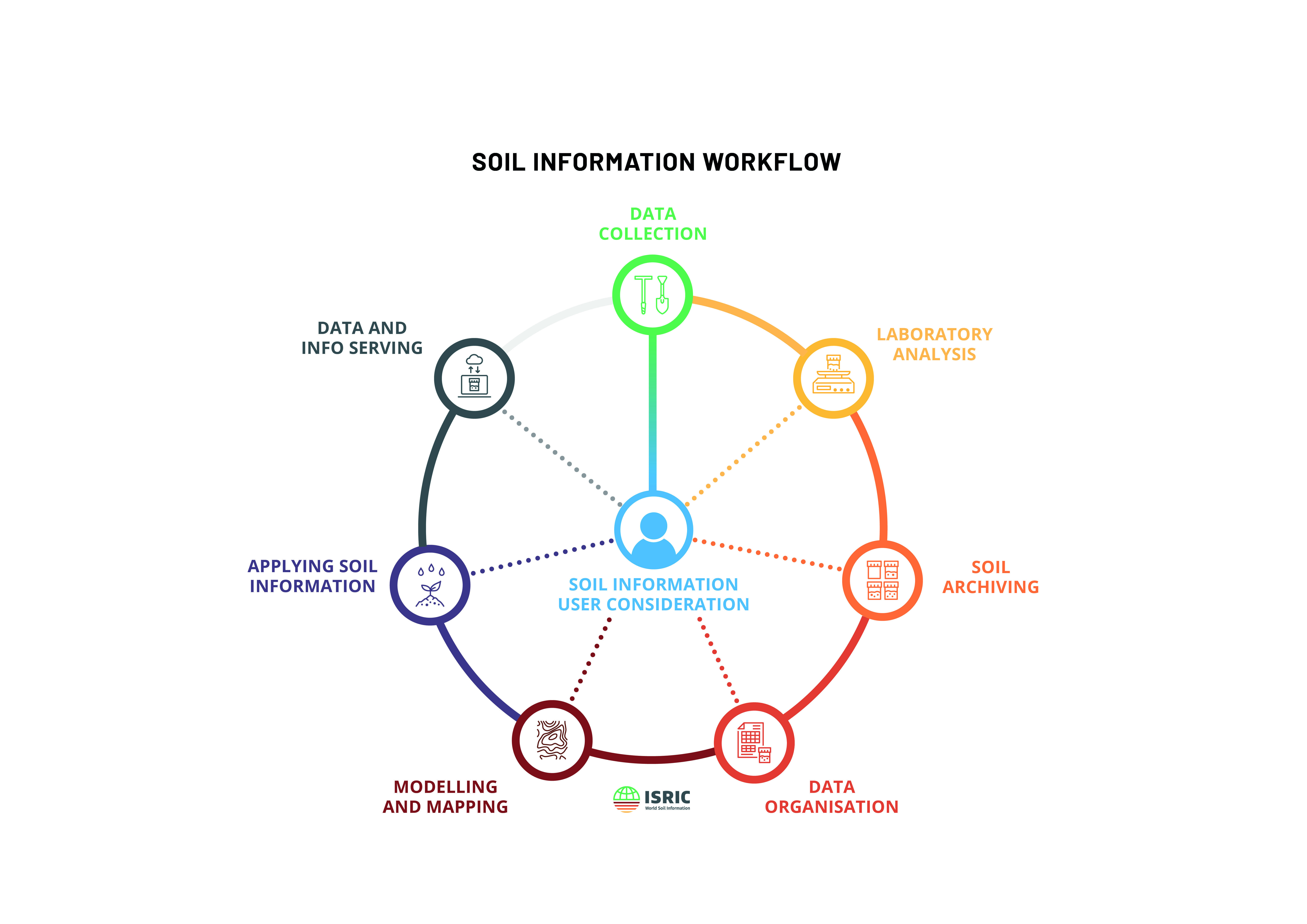



In 2022, we began collaborating with our African partners to establish a network of professionals focused on learning, sharing knowledge, and working together to strengthen Soil Information Systems (SIS) in Africa. This initiative resulted in the establishment of a vibrant Soil Data and Information Community of Practice (CoP), facilitated by ISRIC – World Soil Information. The CoP provides soil professionals and researchers across Africa with a platform to exchange insights, collaborate, and effectively utilise SIS.
In an article on Frankwatching, Kirsten Wagenaar from Sense of Community, along with Chrow Khurshid and Silvana Summa from ISRIC, discusses the process of building the CoP, highlighting key lessons learned, challenges overcome, and the broader role of CoPs as engines of sustainable change and innovation.
Click here to access the full article (in Dutch). For English, please see below.
Soil data plays a crucial role in addressing global challenges such as food security, sustainable land management, and climate change. However, effectively collecting, managing, and applying this data remains a significant challenge, especially in Africa, where soil scientists often face limited resources and support.
In recent years, there has been a growing trend in working with Communities of Practice (CoPs)—networks of professionals who learn, share knowledge, and collaborate to solve complex problems. ISRIC – World Soil Information recognised the potential of this approach and, in 2022, began taking the first steps to establish such a learning network. The Soil Data and Information Community of Practice provides soil professionals and researchers across Africa with a platform to exchange insights, collaborate, and better leverage the value of Soil Information Systems (SISs).
In this article, we outline how a structured step-by-step approach was used to develop the concept of the community, transforming a group of individuals into a dynamic network of experts spanning 42 African countries. You will discover the steps taken to build this community, the challenges overcome, and how the approach aligns with the broader trend of CoPs as engines for sustainable change and innovation.
These insights will help you make more informed decisions about integrating Communities of Practice into your daily work and share examples within your organisation about the value of collaboration, networking, and the use of digital tools. Furthermore, they highlight how to avoid a common pitfall: failing to integrate CoPs effectively with the rest of the organisation.